Water is not only essential for survival, sanitation, and health, but it is also deeply embedded in cultural identity, heritage, and ancestral knowledge. Protecting access to water ensures the survival of cultural practices that rely on water for spiritual, communal, agricultural, and subsistence activities, particularly for Indigenous peoples, women, marginalised communities, and vulnerable populations.
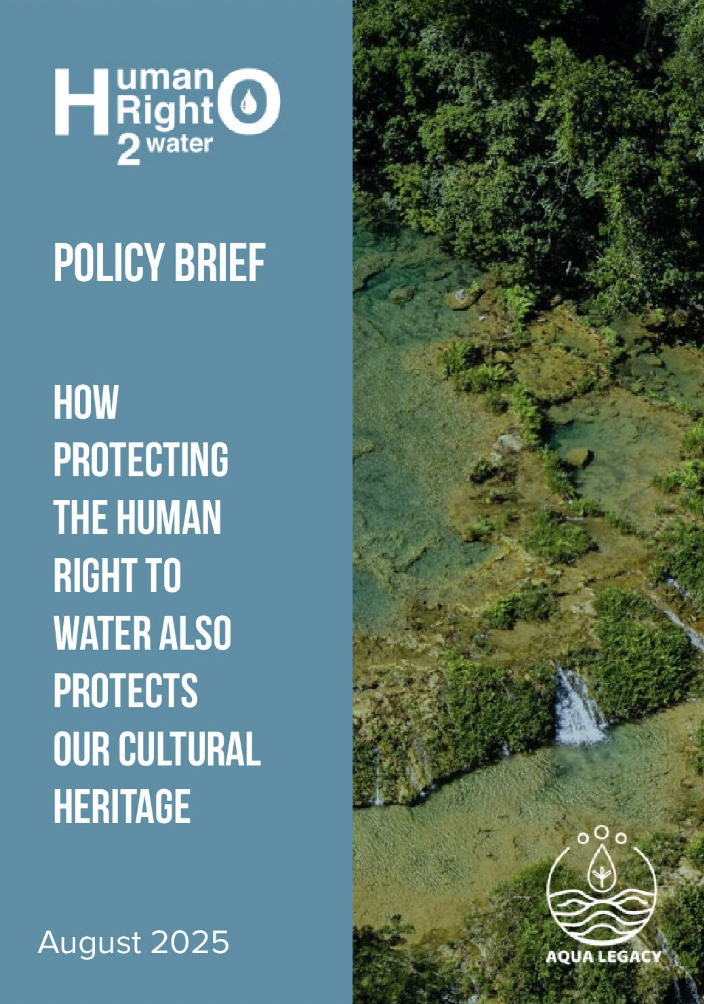
AQUA Legacy and Hurman Right 2 Water have put together a policy brief exploring the interdependence of cultural heritage and the human right to water. This document explores the question: How Protecting the Human Right to Water Also Protects Our Cultural Heritage? And it was launched at World Water Week in Stockholm 2025 in order to compliment the session on Cultural Heritage and Climate Adaptation.
Among the different insights the document provides, this policy brief concludes that protecting the human right to water is not only a humanitarian and development imperative; it is a cultural necessity. It underscores how securing this right also supports environmental justice, gender equity, and sustainable development and outlines the threats posed by climate change, privatisation, pollution, and exclusionary policies, and recommends culturally sensitive water governance reforms that protect both rights and heritage.